The most expensive maintenance calls are almost always the ones that didn’t have to happen. For real estate investors, implementing preventive maintenance for a rental property isn’t just about fixing things when they break—it’s about changing the math on property ownership through proactive resident communication.
The Hidden Cost of Reactive Property Management
In rental property investment, most owners focus heavily on vacancy rates, rental yield, and market appreciation. But one of the most significant—and underestimated—drains on your net operating income (NOI) is reactive maintenance.
Emergency mid-night calls, massive water damage claims, mold remediation invoices, and premature appliance replacements almost always stem directly from a lack of routine care.
Consider these common scenarios:
-
An HVAC system fails entirely because a cheap filter wasn’t changed in 14 months.
-
A bathroom requires thousands in mold remediation because a resident never ran the exhaust fan.
-
A subfloor rots out because a slow, silent leak under the kitchen sink went unnoticed for half a year.
These are not freak accidents. They are predictable, preventable, and expensive.
The ROI of Resident Education: A Category-by-Category Breakdown
HVAC Systems — Your Largest Mechanical Asset
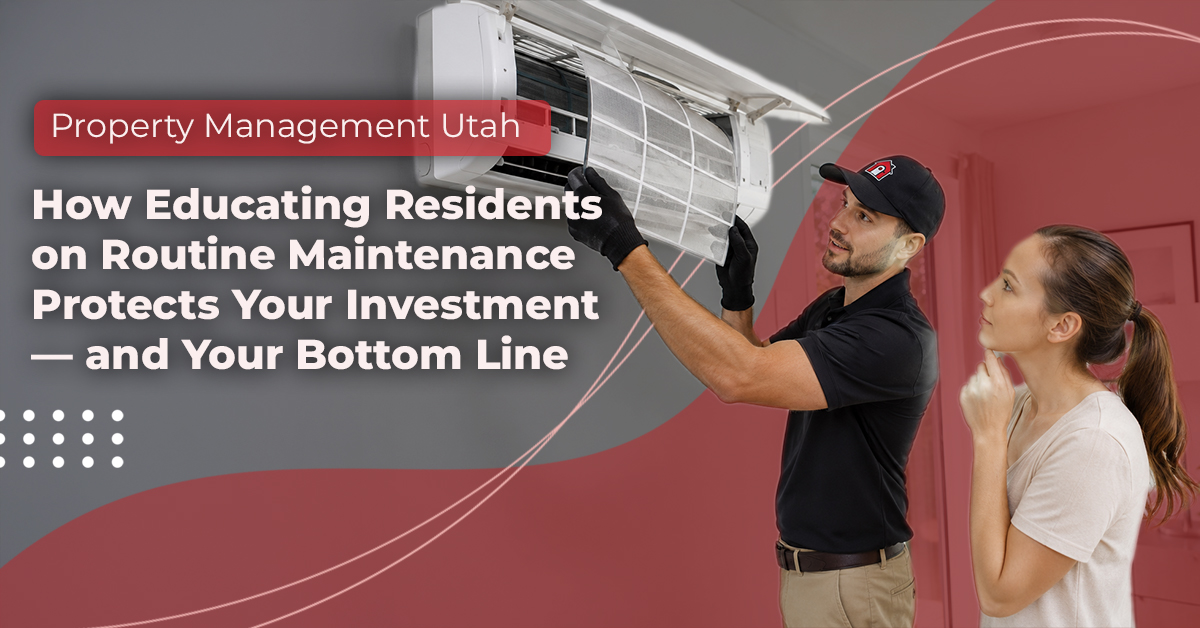
HVAC replacement costs range from $5,000–$12,000+ depending on unit size and system type. Yet the single most impactful factor in HVAC lifespan is filter maintenance — a task that costs under $20 and takes less than 10 minutes.
A clogged filter forces the system to overwork, driving up energy consumption and accelerating mechanical wear on motors, coils, and compressors. Educating residents on a consistent 1–3 month filter replacement schedule, backed by a simple instructional resource, extends system life by years — not months.
💡 Investor implication: A $20 filter replaced on schedule vs. a $7,500 HVAC unit replaced 5 years early is not a maintenance decision. It’s a capital allocation decision.
-
Helpful Video: Watch this step-by-step HVAC Filter Replacement Guide to see how it’s done in under two minutes.
Moisture & Mold — The Liability You Cannot Afford to Ignore
Mold remediation in a rental unit costs an average of $1,500 to $6,000 for moderate cases, escalating to five figures if structural drywall and framing are involved. Beyond the direct financial drain, mold claims carry heavy legal exposure and tenant habitability disputes.
The primary drivers—excess moisture from poor ventilation, winter window condensation, and unchecked slow leaks—are all addressable through resident behavior. Teaching residents to execute basic habits dramatically reduces mold incidence rates at zero cost to you:
-
Running bathroom and kitchen exhaust fans consistently.
-
Wiping window condensation during colder months.
-
Reporting minor moisture anomalies immediately through an online portal.
Helpful Video: Dust-clogged fans don’t exhaust properly. Learn how to safely clean it with this Bathroom Exhaust Fan Cleaning Guide.
..creates a first line of defense that costs nothing per unit and dramatically reduces mold incidence rates.
Plumbing — Early Detection Saves Thousands
Water damage is the #1 source of property insurance claims in residential real estate. A slow drip under a kitchen sink, undetected for three months, can saturate a cabinet floor, damage the subfloor beneath it, and create conditions for mold growth — all from a 50-cent washer that failed.
Routine resident check-ins — monthly visual inspections under sinks and around toilets — act as a distributed early warning system across your portfolio. Paired with a frictionless maintenance reporting tool, this habit converts potential five-figure repairs into routine $75 service calls.
Dryer Lint & Fire Risk — An Underrated Liability
According to the U.S. Fire Administration, dryers cause approximately 2,900 residential fires per year, with failure to clean lint traps cited as the leading factor. In a multi-unit property, a dryer fire is not just a unit-level event — it is a building-level event with corresponding insurance, liability, and vacancy implications.
A 30-second habit — emptying the lint trap after every load — combined with a short instructional video sent to residents, directly reduces this risk profile.
Appliance Lifespan — Protecting Your CapEx Schedule
Consistent misuse and neglect are the leading non-mechanical causes of premature appliance failure. Blocked dryer vents reduce dryer efficiency and create heat buildup. Clogged kitchen exhaust filters allow grease to accumulate on internal components. Obstructed HVAC return vents create negative pressure in the system.
Each of these shortens appliance lifespans and pulls capital expenditure forward on your investment timeline. A proactive resident education program — distributed once per quarter and reinforced through a resident portal — is the lowest-cost CapEx protection tool available to a property owner.

Why Proactive Resident Education Program Outperforms Reactive Management
The true differentiator between average and excellent property management is not just how fast a team responds to a crisis—it is the proactive systems they put in place. Scheduled maintenance reminders, text-based instructional video libraries, and highly accessible reporting portals are operational infrastructure designed to:
-
Reduce inbound, non-emergency maintenance request volume.
-
Improve resident satisfaction and long-term retention (lowering costly turnover).
-
Protect overall asset condition and long-term appraisal value.
-
Create clear, timestamped documentation of resident notifications (critical in habitability dispute scenarios).
At Nestwell, our property management preventive maintenance philosophy is built entirely around this proactive approach. By giving residents the knowledge and tools to serve as the first line of defense, we protect your property’s ROI so you can focus on scaling your portfolio.
Key Takeaways for Property Investors
- Filter maintenance is the highest-ROI habit to establish in any rental unit
- Moisture control through ventilation and condensation management is your primary mold prevention layer
- Early leak detection habits dramatically reduce water damage claims
- Lint trap compliance is a fire risk management issue, not a housekeeping preference
- Resident education is a documented, trackable, defensible asset protection strategy
Interested in learning how Nestwell’s proactive maintenance communication program protects your portfolio? Contact our team to schedule a consultation.